
Ford Ranger vs Toyota Hilux: Which is the best?

When you sit down to pick a pickup truck, two names keep coming up: the Ford Ranger and the Toyota Hilux. These two utes have been fighting for the top spot for decades, and neither one is going away. One leans into modern technology and driving refinement. The other banks have a 50-year reputation for being unbreakable. Choosing between them is genuinely hard. At Castle Toyota, the Hilux is a flagship product for good reason. But this article will give you an honest, head-to-head look at both trucks so you can decide which one actually fits your life. Let’s break it down. Engine and Performance: Ford Ranger vs Toyota Hilux This is where the two trucks go in completely different directions. Ford Ranger gives you real engine variety. The headline option is a 3.0-litre V6 turbo-diesel producing 184kW and 600Nm of torque, paired with a 10-speed automatic transmission. Step down to the base diesel and you still get a 2.0-litre bi-turbo unit with 150kW and 500Nm. A plug-in hybrid variant also joined the Ranger range in 2025. The V6 Ranger pulls heavy loads, overtakes on highways, and climbs steep terrain with almost no effort. That 10-speed gearbox keeps the engine in its sweet spot and makes the truck feel responsive in a way a traditional ute never used to. Toyota Hilux takes a different route. Its hero engine is the 2.8-litre four-cylinder turbo-diesel, producing 150kW and 500Nm with the automatic gearbox (and 420Nm with the manual). This engine is deliberately conservative. Toyota built it for longevity, not peak numbers. If you are running a business in a remote region and your truck absolutely cannot break down, the Hilux powertrain’s reputation is worth more than raw horsepower figures. The verdict here: The Ranger wins on outright performance and engine range. The Hilux wins on long-term proven reliability. Off-Road Capability: Which Truck Goes Further? Both trucks are serious off-roaders. Here is how they compare: Ford Ranger off-road features (mid to high spec): Toyota Hilux off-road features: The Ranger’s Trail Control system is a genuine advantage. It manages throttle and braking automatically on slow, technical terrain, letting you focus on steering. The Hilux ETC is not as sophisticated on paper, but it works with exceptional precision in practice. The truck’s suspension geometry has been refined over decades of real-world use, and many experienced off-road drivers trust it more than newer, more complex systems. Both trucks carry a 3.5-tonne braked towing capacity. The Ranger has integrated trailer brakes as a feature advantage. The Hilux requires an aftermarket brake controller for most trailer setups. Interior, Comfort, and Technology Here the gap between the two trucks is measurable. Ford Ranger features a 12-inch portrait touchscreen on mid and higher specs, a digital instrument cluster, wireless smartphone mirroring, wireless charging, Ford’s SYNC 4 connectivity system, adaptive cruise control, 360-degree camera, and Pro Trailer Backup Assist. The cabin is designed to feel like an SUV rather than a commercial vehicle, with a longer wheelbase giving better rear legroom. Rear passengers get meaningful space, something the Hilux has historically struggled to provide. Toyota Hilux carries an 8-inch touchscreen with Apple CarPlay and Android Auto, six-speed automatic with the 48V mild-hybrid system in newer SR variants, rear camera, and Toyota Safety Sense. The premium trim adds leather seats, heated fronts, and an air-cooled cooler box. The interior is functional and well-built, but it sits behind the Ranger in terms of tech richness and cabin space. For families who also work their trucks, or buyers who spend significant time on-road, the Ranger’s interior makes a noticeable difference on longer trips. Safety Features: Ford Ranger vs Toyota Hilux Both trucks meet the bar set by modern buyers, but the exact spec depends on the variant you choose. The Toyota Hilux recently received a five-star ANCAP rating (tested 2025), with eight airbags, auto emergency braking that covers pedestrians and cyclists, advanced lane-keeping, adaptive cruise control, blind-spot monitoring, rear cross-traffic alert, and tyre pressure monitoring across higher spec grades. The Ford Ranger carries a five-year/unlimited kilometre warranty and has a comprehensive active safety suite on mid to upper trims, including autonomous emergency braking, lane-keeping assist, blind-spot monitoring, and a 360-degree camera system. Pricing and Running Costs Pricing varies significantly between markets, but the general pattern holds: The Hilux opens at a lower base price than the Ranger in most markets. The Ranger’s entry-level, by contrast, comes with more features as standard, so direct comparison requires matching specs carefully. Servicing costs differ. Ford recommends service every 12 months or 15,000km. Toyota recommends service every six months or 10,000km, which means more service visits over the same period. Over five years of ownership, Toyota’s capped-price servicing can add up to more than Ford’s, depending on your market. Resale value is a longstanding Toyota strength. Hilux trucks consistently hold their value better than most competitors, a reflection of buyer confidence in the truck’s durability. Payload and Practicality Toyota Hilux maximum payload: approximately 780kg to 1,310kg depending on variant and configuration. Ford Ranger maximum payload: ranges from around 717kg on the Raptor to over 1,900kg on the heavy-duty Super Duty variant. The Ranger’s tray offers slightly more width between the wheel arches, which can matter if you are loading equipment with specific width requirements. The Hilux tray is physically larger in overall dimensions on some variants. Both come in single cab, extra cab, and double cab configurations, with two-wheel drive and four-wheel drive options across the range. Reliability and Long-Term Ownership This is the Toyota Hilux’s strongest argument. The Hilux has been produced continuously since 1968. Its 2.8-litre diesel engine is one of the most tested powertrains in the segment. Mechanics know it. Parts are available. The truck’s reputation in mining, farming, and remote operations is not marketing, it is the result of decades of consistent performance under harsh conditions. The Ranger is newer in its current generation and more complex, with more electronics and more powertrain options. That complexity brings benefits in comfort and performance. It
Toyota Hilux vs Toyota Tacoma: Which one to buy in 2026
Two pickup trucks. One famous badge. A real choice that depends entirely on where you live and what you need from a truck. The Toyota Hilux vs Toyota Tacoma debate has gone on for decades, and in 2026, both trucks have grown more capable, better equipped, and more expensive than ever. Here is the thing: these two trucks are not direct competitors in most markets. The Tacoma is a North American-market midsize pickup, while the Hilux is the global workhorse sold across Asia, Africa, Europe, Australia, and India. If you are reading this from India, the Hilux is your Toyota pickup option. If you are in the United States, the Tacoma is your truck. But for buyers in countries where both are available, or for anyone researching which platform suits their needs better, this comparison goes deep. Let’s break it down. A Quick Look: Hilux vs Tacoma at a Glance Feature Toyota Hilux (2026) Toyota Tacoma (2026) Market Global (India, Australia, etc.) North America Engine 2.8L Turbo Diesel, 204 PS 2.4L Turbo Petrol / i-FORCE MAX Hybrid Power Output 204 PS / 500 Nm 228–326 hp depending on trim Starting Price (India) ₹28.02 lakh (ex-showroom) Not sold in India Starting Price (USA) Not sold in USA ~$32,245 MSRP Platform IMV (body-on-frame) TNGA-F (body-on-frame) Towing Capacity ~3,500 kg ~4,400 lbs (~2,000 kg) Safety Standard 5-Star ANCAP Toyota Safety Sense 3.0 (standard) Engine and Performance: Diesel Torque vs Petrol Muscle Here is where the two trucks take very different roads. Toyota Hilux Engine Specs The Toyota Hilux runs a single 2.8-litre turbo diesel engine producing 204 PS of power at 3,400 rpm and 420 Nm of torque. You can pair it with either a 6-speed manual or a 6-speed automatic gearbox. Diesel torque is the Hilux’s calling card. It pulls hard from low revs, making it ideal for towing, hauling, and grinding through rough terrain without breaking a sweat. In real-world driving, the torquey 201 bhp diesel engine makes driving duties easy and the six-speed automatic shifts gear smoothly. On city roads fuel efficiency lands around 9 to 11 km/l, and on highways it can reach 12 to 14 km/l. Toyota Tacoma Engine Specs The Tacoma goes in a completely different direction. The base trim runs a turbocharged 2.4-litre four-cylinder engine producing 228 horsepower, paired with an 8-speed automatic transmission and rear-wheel drive, with available four-wheel drive. Higher trims get an upgraded version generating 278 horsepower, and there is the i-FORCE MAX hybrid powertrain delivering 326 horsepower. The 2025 Toyota Tacoma is capable of achieving 20 mpg in the city and 26 mpg on the highway. The hybrid option is a genuine plus for fuel economy without sacrificing capability. Winner on torque: Hilux. Winner on fuel economy options: Tacoma, especially with the hybrid. Off-Road Capability: Which Truck Goes Further? Both trucks are built for rough terrain. Let’s see how each one handles it. Hilux Off-Road Setup The Hilux includes a 4×4 system, electronic differential lock, and Downhill Assist Control (DAC) for off-road performance. It also comes with Hill Assist Control (HAC), front and rear parking sensors, and ground clearance that gives it confidence on rocky trails, river crossings, and unpaved mountain paths. The Hilux sits on Toyota’s IMV (Innovative International Multi-purpose Vehicle) platform, a ladder-frame chassis that is also used by the Fortuner and Innova Crysta. This platform is proven across millions of vehicles worldwide and is designed to absorb punishment over long periods. Tacoma Off-Road Setup The Tacoma takes off-road performance seriously enough to offer dedicated trim levels for it. Off-road fans will find a lot to love, especially with the Trailhunter trim that brings big tires, serious underbody protection, and overland-ready features. The Tacoma uses the Toyota New Global Architecture-F (TNGA-F) platform that combines high-strength steel with lightweight aluminum and laser welds, for enhanced rigidity and less weight throughout the chassis. The same platform underpins the full-size Tundra and Sequoia. One important detail: the coil-spring rear suspension on Double Cab models marks a notable step forward in ride quality. The Hilux still uses a leaf-spring rear setup, which is more durable for heavy loads but less comfortable when the bed is empty. Winner on trail-specific trims: Tacoma. Winner on load-bearing durability: Hilux. Interior, Features, and Technology Hilux Cabin The Hilux cabin has automatic dual-zone climate control and a 7.8-inch infotainment system with six speakers, Apple CarPlay and Android Auto, Bluetooth and USB connectivity. The power-adjustable driver’s seat, tilt-telescopic steering adjustments, and cruise control enable comfortable seating. Both rows are extremely spacious. The rear 60:40 split tip-up seats provide flexibility, and the cooled upper glovebox and centre console box enhance practicality. Some reviewers note that modern conveniences like an electric tailgate are absent. Tacoma Cabin The Tacoma goes bigger on tech. A 14-inch multimedia touchscreen display supports satellite navigation, SiriusXM, and wireless Apple CarPlay or Android Auto compatibility. There is also an available JBL premium audio system. The cabin features big, glove-friendly controls that make it easy to use with muddy hands or winter gloves. That said, critics point out that the interior is rugged but unrefined, with hard plastics and uneven panel gaps that fall short of segment leaders. Winner on tech: Tacoma. Winner on build feel: Hilux. Safety Features Hilux Safety The Hilux sports 7 airbags, ABS with EBD, and Vehicle Stability Control (VSC) as standard features, and carries a 5-star ANCAP safety rating. The new-generation Hilux has also performed well in crash tests, scoring 33.96 points out of 40 for adult occupant protection and 44 out of 49 points for child occupant protection. Tacoma Safety Toyota Safety Sense 3.0 is standard on every 2026 Tacoma trim. This suite covers automatic emergency braking for vehicles, pedestrians, bicyclists, and motorcyclists, full-speed range dynamic radar cruise control, lane departure alert with steering assist, and road sign assist. Winner on safety tech breadth: Tacoma. Both earn strong crash test ratings. Pricing and Value Hilux Price in India Toyota Hilux price for the base model starts at Rs 28.02 lakh and the
Toyota Hilux vs Isuzu D-Max: Which one to Choose in 2026

India’s pickup truck segment is small, but it punches well above its weight. Right now, there are only two serious contenders fighting for the same buyer: the Toyota Hilux and the Isuzu D-Max V-Cross. Both have earned their reputations on tough terrain. Both have recently been updated for 2026. And both are genuinely good at what they do. So how do you choose between them? That depends entirely on what you’re buying it for. Let’s break it down, category by category. Toyota Hilux vs Isuzu D-Max: A Quick Overview The Toyota Hilux needs no introduction. It’s been around since 1968, and its reputation for surviving everything from desert crossings to war zones is the stuff of automotive legend. In India, it runs a 2.8-litre diesel engine, sits on Toyota’s proven IMV platform (the same one under the Fortuner and Innova Crysta), and is available exclusively in 4×4 configuration. The Isuzu D-Max V-Cross received a meaningful update in February 2026. Isuzu discontinued the 4×2 variant entirely, so every D-Max sold in India now comes with 4×4 as standard. It also got a bigger 10.3-inch touchscreen, a 360-degree camera, an auto-locking differential across all trims, and some styling tweaks. The 1.9-litre diesel engine carries over. Both trucks are lifestyle pickups aimed at buyers who want genuine off-road capability without giving up comfort on daily drives. Price Comparison: Hilux vs D-Max V-Cross 2026 Here’s where the first big difference shows up. Toyota Hilux (2026, ex-showroom): Isuzu D-Max V-Cross (2026, ex-showroom): The D-Max undercuts the Hilux by a meaningful margin at every level. If you want a 4×4 pickup in the ₹25–30 lakh range, the D-Max is the only option. The Hilux base model starts nearly ₹2.5 lakh higher, and the fully loaded variants push past ₹35 lakh. That said, price alone doesn’t tell the whole story. Engine and Performance: Which Pickup Truck is More Capable? This is where the two trucks diverge quite significantly. Toyota Hilux Engine Specs The Hilux gets a 2.8-litre four-cylinder diesel engine producing 201 bhp and 500 Nm of torque (on the automatic variants). It pairs with either a 6-speed manual or a 6-speed automatic gearbox. Real-world mileage typically lands between 10–12 kmpl, depending on how and where you drive. The larger engine gives the Hilux a clear edge in towing capacity and load-pulling ability. It handles heavy cargo with noticeably more composure than the D-Max, and highway overtaking at speed is relaxed and confident. The Hilux also carries a payload capacity of around 470 kg. Isuzu D-Max Engine Specs The 2026 D-Max V-Cross runs a 1.9-litre diesel making 161 bhp and 360 Nm of torque. That’s a meaningful step down from the Hilux in raw numbers. It’s mated to a 6-speed manual or automatic, and the ARAI-claimed mileage is 12.4 kmpl, which is slightly better than the Hilux on paper. For typical use daily commuting, occasional off-roading, weekend trips the D-Max engine is more than adequate. It’s peppy in city traffic and holds its own on highways. But if you’re regularly towing a trailer or carrying heavy loads, the Hilux’s bigger engine earns its premium. Verdict on performance: Hilux wins on sheer pulling power. D-Max is adequate for most users and slightly more fuel-efficient. Off-Road Capability: Toyota Hilux vs Isuzu D-Max Both trucks are built for rough terrain, but they go about it slightly differently. The Toyota Hilux offers: The Isuzu D-Max V-Cross 2026 offers: The Hilux’s 700 mm wading depth is a genuine advantage for river crossings or heavily flooded roads, a real consideration in many parts of India during monsoon. The D-Max, now with an auto-locking differential across all variants, has closed some of the gap in off-road equipment. For serious overlanding or expedition-style use, the Hilux still has an edge. For recreational off-roading and trail driving, the D-Max handles itself very well. Interior, Features and Comfort Toyota Hilux Interior The Hilux cabin is spacious upfront. The driver’s seat offers excellent visibility and a commanding position on the road. Higher variants get leather upholstery, an 8-inch touchscreen with wireless Apple CarPlay and Android Auto, dual-zone climate control, 7 airbags, and an electrochromic rearview mirror. The rear seat is a known weak point. Three adults across the back bench is tight, and the upright angle of the rear seat is not ideal for long trips. The rear suspension (leaf springs) also results in a bouncy ride when the bed is empty, a common pickup truck characteristic that softens considerably when carrying a load. Isuzu D-Max Interior The 2026 update brings a noticeably bigger 10.3-inch floating touchscreen with wireless Android Auto and Apple CarPlay, a new 360-degree camera, TPMS, and an 8-speaker sound system on top variants. The cabin has also received contrast inserts on the dashboard and door panels. Where the D-Max loses ground is in airbag count the top-spec Z Prestige 4×4 AT gets 6 airbags, but the base variants get fewer. The Hilux offers 7 airbags across variants, which is a meaningful safety advantage. Verdict on features: The 2026 D-Max update brings it much closer to the Hilux on technology, particularly with the larger screen and 360-degree camera. The Hilux still leads on safety hardware. Reliability and Service Network Toyota’s reputation for reliability is not marketing spin, it’s backed by decades of real-world evidence across some of the harshest operating conditions imaginable. The Hilux, in particular, is built on the same platform as the Fortuner, which has an enormous service network across India. If you’re based in a smaller city or a semi-urban area, Toyota’s dealer and service reach is a meaningful practical advantage. Spare parts are widely available, and service costs are predictable. Isuzu has grown its presence in India, particularly with commercial vehicle buyers, but its dealership network is smaller in comparison to Toyota’s. For buyers in Jalandhar and Punjab, Castle Toyota is an authorized Toyota dealer offering test drives, loan assistance, insurance support, and access to the full Hilux range. If you’re weighing your options, it’s worth visiting to see the
How Many Colours Are Available in Toyota Hilux in India

If you’re buying a Toyota Hilux in India, the colour question isn’t as simple as just picking your favourite shade. Because unlike most cars, the Hilux has specific colours tied to specific variants. Get this wrong and you might end up disappointed at the dealership. This guide covers every Toyota Hilux colour available in India, which variant each one belongs to, what the Hilux Black Edition is all about, and some practical advice on picking the right colour for the long run. How Many Colours Does the Toyota Hilux Come in India? The short answer: 5 colours across the standard lineup, plus the Hilux Black Edition, which is exclusively Attitude Black. Here is the full list of Toyota Hilux colours in India: That gives you a well-rounded palette, from clean and neutral to bold and aggressive. Each colour suits a different kind of buyer, and we’ll get into that below. Toyota Hilux Colour Options by Variant This is the part most buyers miss, so pay attention. According to Toyota India’s official product page, colour availability on the Hilux is not uniform across all variants. Here is how it breaks down: STD Variant (4X4 MT) The base STD trim gets 3 colour options: If you’re going with the entry-level variant, your choices are more limited. You won’t get Super White or Attitude Black in this trim. High Variant (4X4 MT and 4X4 AT) The High variants open up more options. Buyers here can choose from: The High variants give you access to the full standard colour palette, including the popular Super White and Attitude Black options. Hilux Black Edition (High AT only) The Black Edition is a special variant launched in March 2025 after being showcased at Auto Expo 2025. It comes in only one colour: Attitude Black and that’s kind of the whole point. Every exterior element, from the radiator grille to the ORVM covers, door handles, and 18-inch alloy wheels, gets the blackout treatment. There’s a subtle touch of chrome on the rear bumper to break the monotony, but otherwise, this one is committed to the look. The Black Edition is priced at Rs 37.90 lakh (ex-showroom) and is mechanically identical to the High AT, running the same 2.8-litre turbo diesel making 204 PS and 500 Nm. A Closer Look at Each Toyota Hilux Colour White Pearl Crystal Shine This is the premium white in the lineup, with a pearlescent finish that catches light differently than flat white. It’s available across all three standard variants, making it the most widely accessible colour. Pearl finishes also tend to hold their appearance well over time and look sharp when the truck is clean. Super White A clean, solid white no shimmer, no metalite flake. It’s the practical choice: easy to match, widely popular, and traditionally holds good resale value in the Indian market. Not available on the STD trim though. Emotional Red A bold, deep red that gives the Hilux a presence on the road. It’s available on all three standard variants, including the base STD. If you want a Hilux that gets noticed without going into full stealth mode, this is a strong pick. Red also photographs very well, in case that matters to you. Grey Metallic Grey Metallic has become a go-to choice for buyers who want something mature but not boring. The metallic finish adds depth to the colour, and grey hides everyday dust and minor scratches reasonably well, particularly useful in Indian road conditions. Available on all standard variants. Attitude Black Available on the High MT and exclusively as the Black Edition variant, Attitude Black lives up to its name. The Hilux already has a commanding silhouette, and in black, it looks especially aggressive. The downside: black shows dust, water spots, and scratches more than any other colour. If you’re using the Hilux for actual off-roading in muddy terrain, maintenance of a black exterior requires more effort. The Hilux Black Edition: Worth It? The Black Edition deserves its own section because it’s a proper special variant, not just a colour swap. Beyond the all-black exterior, it retains the full feature set of the High AT: 8-inch touchscreen with wireless Android Auto and Apple CarPlay, dual-zone climate control, leather upholstery, 8-way powered driver seat, auto-dimming IRVM, 7 airbags, and front and rear parking sensors. The 2.8-litre diesel with the 6-speed torque converter automatic is your only powertrain choice here. If you love the blacked-out aesthetic and were already planning on buying the High AT, the Black Edition is a logical step up in style without requiring a major jump in budget over the standard High AT price. Which Colour Should You Pick? Let’s Break It Down Picking a colour for a truck like the Hilux comes down to how you’ll use it and where you’ll keep it. For daily city use or highway cruising: White Pearl Crystal Shine or Super White. White colours reflect heat better, show scratches less on Indian roads (especially white dust), and tend to have stronger resale demand. For buyers who want something different from the crowd: Emotional Red or Attitude Black. Both make a statement, and the Hilux in red or black genuinely looks like a vehicle with intent. For practical buyers who want balance: Grey Metallic sits in the sweet spot. It looks premium, doesn’t demand constant cleaning, and has broad appeal when it’s time to sell. For off-road enthusiasts: Go with Grey Metallic or one of the whites. Mud and red soil from Indian trails cling to black and red finishes and are far more visible. Lighter shades are easier to clean and maintain after a rough weekend. One more thing to note: the Hilux does not come in a dual-tone exterior option. What you see in the catalogue is what you get single-body-colour finish all around. Resale Value and Colour Choice Colour affects resale more than most people expect. In the Indian pickup truck market, white has historically held the strongest resale value. Grey is a close second. Red
Toyota Hilux Vs Fortuner: Which One to Choose

Two of the most talked-about vehicles in Toyota’s India lineup share a lot under the skin, the same IMV platform, the same 2.8-litre diesel engine in their top trims, and the same reputation for going anywhere without complaint. Yet the Toyota Hilux and the Toyota Fortuner serve very different masters. One is a workhorse with a truck bed. The other is a three-row SUV built for family road trips and city roads alike. If you have been trying to choose between the two, here is a clear breakdown of what each vehicle does well, where each falls short, and who should buy which. Toyota Hilux vs Fortuner: Understanding the Core Difference Before getting into specs, it helps to understand what these two vehicles are at heart. The Toyota Fortuner is a body-on-frame SUV. It seats seven, has an enclosed cabin, and is designed to do urban driving well while being capable off-road when needed. It appeals to families, executives, and anyone who wants a capable all-rounder. The Toyota Hilux is a lifestyle pickup truck. It has an open cargo bed, seats five, and is built around utility and load-carrying. It appeals to adventure seekers, farmers, construction professionals, and those who genuinely need to haul things. Both share Toyota’s legendary build quality and a body-on-frame construction which is why they both feel planted and durable. But from here, the differences are substantial. Price Comparison: Hilux vs Fortuner Let’s start with money, because that is usually where the decision begins. The Hilux comes in three variants. The Fortuner comes in eight, including the Legender and GR Sport versions, which push the price significantly higher. So if budget is your primary concern, the Hilux gives you Toyota’s rugged DNA at a lower entry point. If you want more variant options and are comfortable spending more for a family-focused vehicle, the Fortuner offers more room to configure your purchase. You can explore both models with pricing details and booking options at Castle Toyota, which stocks both the Hilux and Fortuner at their Jalandhar showroom. Engine and Performance: What Powers Each Vehicle? Toyota Hilux Engine The Hilux is diesel-only in India. It gets a 2.8-litre, 4-cylinder turbocharged diesel engine producing around 201 bhp at 3,400 rpm and a healthy 420 Nm of torque starting from just 1,400 rpm. You can choose between a 6-speed manual or a 6-speed automatic gearbox. That torque figure is the standout number. At low RPMs, the Hilux pulls hard — which is exactly what you need when you are towing, climbing a gradient, or moving through mud. Toyota Fortuner Engine The Toyota Fortuner offers both petrol and diesel options. The diesel Fortuner is impressively capable on highways and trails. The petrol option is smoother but less suited for serious off-road work or towing. Bottom line on performance: Both vehicles are well-matched in diesel form. The Hilux edges ahead in load-carrying applications because of its leaf-spring rear suspension and truck chassis tuning. The Fortuner is more comfortable on long highway drives. Design and Dimensions: Size Matters Here This is where the two vehicles diverge most visibly. Feature Toyota Hilux Toyota Fortuner Length 5,325 mm 4,795 mm Height 1,815 mm 1,835 mm Width 1,855 mm 1,855 mm Wheelbase 3,085 mm 2,745 mm The Hilux is significantly longer than the Fortuner, nearly 53 cm more. That extra length comes from the cargo bed, which gives you 470 kg of payload capacity and a large open load area for gear, equipment, or adventure kit. The Fortuner, while still a large vehicle by most standards, is better proportioned for navigating city traffic, parking, and tight roads. For someone doing regular city driving with occasional highway runs, the Fortuner’s size is more manageable. Interior and Comfort: Family Friendly vs Functionally Focused This is where the Fortuner wins decisively if you are buying a family vehicle. The Fortuner seats seven people across three rows with a proper third row of seats, rear AC vents, and more premium interior appointments. Higher variants come with ventilated leatherette seats, a JBL 11-speaker audio system, a powered tailgate, cruise control, and woodgrain interior trim. The Hilux seats five across two rows. Its interior is well-built and durable, with an 8-inch touchscreen, Android Auto, Apple CarPlay, and a 6-speaker audio system. It also gets Toyota’s i-Call and e-Call connectivity features. But it is designed with utility in mind rather than luxury. The materials are harder-wearing and the cabin layout is more practical than indulgent. If you carry passengers regularly, kids, extended family on road trips, colleagues the Fortuner is the better fit. If you mostly drive alone or with one other person and need your vehicle to work as hard as you do, the Hilux makes more sense. Off-Road Capability: Which Goes Further Off the Beaten Track? Both vehicles are genuinely capable off-road. But they approach terrain differently. The Fortuner uses coil spring rear suspension, which gives it a more comfortable ride and better articulation over rocky terrain. It comes with 4WD options, good ground clearance, and has proven itself on everything from Himalayan passes to desert dunes. The Hilux uses leaf spring rear suspension at the back, the setup you find on work trucks. This makes it stiffer when empty, but gives it a major advantage when loaded or when driving over continuous rough terrain for extended periods. Its chassis is also built to a higher load specification than the Fortuner’s. Toyota engineers have publicly stated that the Hilux chassis is reinforced beyond standard requirements, using superior metals in high-stress zones. One practical note: the Hilux gets drum brakes at the rear, which is standard for load-bearing trucks and actually provides greater braking force under heavy loads despite seeming old-fashioned. For casual weekend off-roading, both are more than capable. For serious utility work in remote areas, construction sites, farms, long-haul adventure overlanding with gear the Hilux is the more purpose-built tool. Safety Ratings: An Important Difference This one is worth paying attention to. This gap matters if you are carrying
What Type of Gearbox Is Used in a Toyota Fortuner Car?
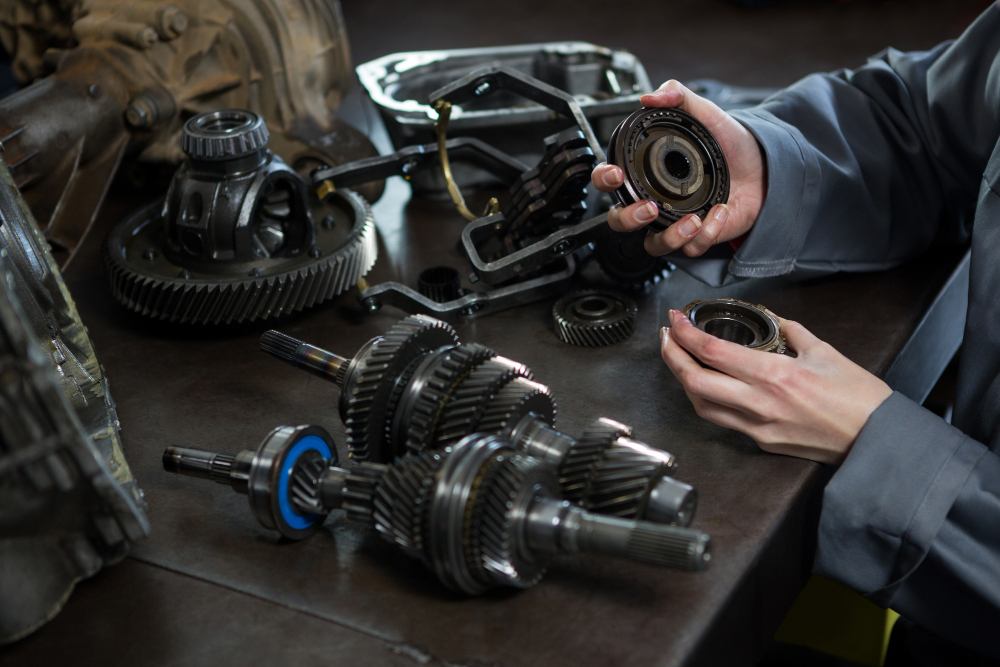
The Toyota Fortuner has been one of India’s most sought-after full-size SUVs for over a decade and for good reason. It’s built tough, it sells well, and it handles everything from city traffic to rocky off-road trails. But one question that comes up repeatedly among buyers is about the transmission: what type of gearbox does the Fortuner actually use, and how does it affect the driving experience? Let’s break it down. The Toyota Fortuner Gearbox: A Quick Answer The Toyota Fortuner is available with two types of gearboxes depending on the variant and fuel type: The automatic option is the more popular choice and is available across both petrol and diesel variants. The manual gearbox is offered only with the diesel engine. Here is why that matters: the petrol Fortuner (2.7-litre) comes exclusively with a 6-speed automatic, while the diesel Fortuner (2.8-litre) gives buyers the option of either a 6-speed manual or a 6-speed automatic depending on the variant. Understanding the 6-Speed Torque Converter Automatic Gearbox The phrase “torque converter automatic” trips people up sometimes, so let’s clear it up. A torque converter is a fluid coupling device that sits between the engine and the transmission. It transfers rotational power from the engine to the gearbox without a physical clutch instead using hydraulic fluid to do the job. This is what makes an automatic Fortuner feel so smooth when you’re pulling away from a traffic light or crawling over a speed bump. Here is how it’s different from other automatic types: Toyota’s choice of a torque converter AT for the Fortuner is deliberate. The Fortuner is a body-on-frame SUV designed for demanding conditions, and torque converters are proven to handle high torque loads and off-road stress better than most other automatic designs. Diesel Fortuner Gearbox Options in India The 2.8-litre turbo-diesel engine is the heart of the Fortuner lineup in India, and it gets the most gearbox flexibility. 6-Speed Manual Transmission The manual variant pairs the 2.8-litre diesel engine with a 6-speed gearbox producing 204 PS of power and 420 Nm of torque. This is slightly lower torque than the automatic — and that’s not a coincidence. Manual gearboxes have a mechanical torque limit in this configuration, so the automatic unlocks more torque from the same engine. The manual is available in both 4×2 (rear-wheel drive) and 4×4 configurations. Drivers who prefer direct control over gear selection tend to gravitate toward this option, especially for regular highway use. 6-Speed Torque Converter Automatic The automatic diesel variant raises the torque output to 500 Nm, a significant jump. This is because the torque converter and the electronic control unit (ECU) work together to manage power delivery more precisely, allowing the engine to operate at higher torque without damaging the drivetrain. Power output remains at 204 PS, but the additional 80 Nm of torque makes the automatic feel noticeably stronger in real-world driving, particularly when overtaking or climbing a hill with a full load. Petrol Fortuner: Only Automatic The 2.7-litre naturally aspirated petrol engine is only available with the 6-speed torque converter automatic gearbox, and only in rear-wheel drive (4×2). It produces 166 PS and 245 Nm — enough for city driving and highway cruising, though the diesel variants are clearly more powerful. There is no manual option for the petrol Fortuner in India. What Is the Toyota Fortuner Neo Drive 48V and How Does the Gearbox Work With It? In June 2025, Toyota introduced the Fortuner Neo Drive 48V in India, a 48-volt mild-hybrid variant that adds a belt-driven integrated starter-generator (ISG) to the existing 2.8-litre diesel engine. The mild-hybrid system does not change the gearbox type. The Neo Drive still uses the same 6-speed torque converter automatic gearbox. What the 48V system does is assist the engine during acceleration and regenerate energy during braking, resulting in smoother torque delivery and marginally better fuel efficiency (Toyota claims roughly 5% improvement in city conditions). This variant is available in 4×2 and 4×4 configurations, both with the 6-speed automatic only. There is no mild-hybrid manual option. How the 4×4 Transfer Case Works Alongside the Gearbox On 4×4 variants, the Fortuner has a second lever beside the gear shifter. This is not part of the main gearbox; it controls the transfer case, which distributes power between the front and rear axles. Here is what each position does: Mode What It Does 2H Rear-wheel drive only. For normal roads. 4H Four-wheel drive, high range. For wet, gravel, or light off-road conditions. 4L Four-wheel drive, low range. For steep climbs, deep mud, or rock crawling. Speed limited to 40 km/h. A key point: to shift from 4H to 4L, the vehicle must be stopped and the transmission must be in Neutral. Attempting this while moving can damage the transfer case. The 4L mode effectively multiplies the torque available, giving the Fortuner its genuine off-road capability. Combined with the 6-speed automatic’s ability to hold a low gear consistently, the result is a vehicle that can crawl through difficult terrain without the driver constantly managing gear changes. Fortuner Transmission Options: Full Summary Here is a clear overview of all gearbox configurations available in the Toyota Fortuner in India: Engine Gearbox Drive Torque 2.7L Petrol 6-speed TC Automatic 4×2 only 245 Nm 2.8L Diesel 6-speed Manual 4×2 / 4×4 420 Nm 2.8L Diesel 6-speed TC Automatic 4×2 / 4×4 500 Nm 2.8L Diesel + 48V MHEV 6-speed TC Automatic 4×2 / 4×4 500 Nm Manual vs Automatic Gearbox in Fortuner: Which Should You Choose? This depends entirely on how you use the car. Go with the manual if: Go with the automatic if: For most buyers in India, especially those dealing with city traffic and occasional highway trips the 6-speed torque converter automatic is the more practical choice. The extra torque and the smoother driving experience make a meaningful difference day to day. What Fortuner Buyers in Jalandhar Should Know If you’re based in Punjab or the surrounding region and looking at the Fortuner, Castle Toyota in Jalandhar offers
Toyota Fortuner Tyre Size and Cost for All Variants in 2026
The Toyota Fortuner has held its ground as one of the most respected ladder-frame SUVs in India for over a decade. People who buy one know what they are getting: a serious, body-on-frame machine that weighs over two tonnes and handles everything from Himalayan switchbacks to Mumbai expressways without complaint. But when it comes to tyres, most Fortuner owners are surprised to learn that the SUV does not run a single tyre setup across the lineup. The 2WD and 4WD variants wear different sizes, and that difference matters for ride quality, handling, and what you will spend when it is time for a replacement. This guide covers the Toyota Fortuner tyre size and cost for all variants in 2026, including the standard Fortuner, Legender, and GR Sport. Whether you are buying fresh rubber or just trying to understand what is already on your car, here is everything you need to know. Toyota Fortuner Tyre Size for All Variants in 2026 Here is a quick reference table for the Toyota Fortuner tyre size variant-wise: Variant Drive Type Tyre Size Wheel Size Fortuner 2.7 Petrol AT 4×2 (2WD) 265/65 R17 17-inch alloy Fortuner 2.8 Diesel MT 4×2 (2WD) 265/65 R17 17-inch alloy Fortuner 2.8 Diesel AT 4×2 (2WD) 265/65 R17 17-inch alloy Fortuner 2.8 Diesel MT 4×4 (4WD) 265/60 R18 18-inch alloy Fortuner 2.8 Diesel AT 4×4 (4WD) 265/60 R18 18-inch alloy Fortuner Legender 2.8 AT 4×2 (2WD) 265/60 R18 18-inch alloy Fortuner Legender 2.8 AT 4×4 (4WD) 265/60 R18 18-inch alloy Fortuner GR Sport AT 4×4 (4WD) 265/60 R18 18-inch alloy The split is clean: all 2WD base variants use 265/65 R17, and all 4WD, Legender, and GR Sport variants use 265/60 R18. One number stays the same across every single variant the 265mm width. Toyota kept that consistent, and for good reason. On a vehicle this heavy, 265mm gives the footprint needed to stay stable on wet roads and soft ground. What changes between the two sizes is the sidewall height and the rim diameter. Let’s break it down. Understanding the Fortuner Tyre Size Numbers If you have ever looked at a tyre sidewall and wondered what those numbers mean, here is the short version: 265/65 R17 (Standard 4×2 Variants) 265/60 R18 (4×4, Legender, and GR Sport) The practical difference? The 17-inch setup on 4×2 variants gives a noticeably softer ride because there are more rubber absorbing bumps before they reach the chassis. The 18-inch setup on 4WD and Legendre variants is sharper-looking and handles better at highway speeds, but transmits more road surface into the cabin on broken city roads. Toyota Fortuner Tyre Price in India (2026) Tyre prices vary depending on the brand, the seller (authorised dealer vs online marketplace), and whether you are buying with installation included. Here is a realistic range for both Fortuner tyre sizes in 2026: For 265/65 R17 (4×2 Variants) Brand Approximate Price per Tyre MRF ₹10,500 – ₹12,500 CEAT ₹10,000 – ₹13,000 JK Tyre ₹10,000 – ₹12,000 Apollo ₹11,000 – ₹13,500 Bridgestone ₹13,000 – ₹17,000 Michelin ₹15,000 – ₹20,000 Yokohama ₹13,500 – ₹18,000 For 265/60 R18 (4×4, Legender, GR Sport) Brand Approximate Price per Tyre MRF ₹12,000 – ₹15,000 CEAT ₹12,500 – ₹16,000 Apollo ₹12,000 – ₹15,500 Bridgestone ₹16,000 – ₹20,000 Michelin ₹18,000 – ₹23,000 Yokohama ₹15,000 – ₹20,000 Vredestein Up to ₹23,800 So if you are replacing all four tyres on a Fortuner Legender, budget anywhere from ₹50,000 to ₹90,000+ depending on the brand you choose. Budget brands cover the basics. If you do regular highway runs or cover mountainous terrain, brands like Michelin, Yokohama, or Bridgestone are worth the premium for braking performance and noise levels. Teams at Castle Toyota in Jalandhar can guide you on OEM-approved replacements that suit how you actually use the vehicle city driving, highway touring, or occasional off-road runs. What Tyre Pressure Should a Fortuner Run? This is where a lot of owners get it wrong. Tyre pressure is not a set-and-forget thing; it depends on how loaded the vehicle is and what kind of driving you are doing. Toyota’s recommended Fortuner tyre pressure: Always check pressure when the tires are cold, meaning the car has been stationary for at least 3 hours or driven less than 2 km. Once a tyre heats up from driving, the pressure reading goes up. Adjusting a hot tyre to hit 32 PSI actually means the tyre will be underinflated once it cools down. Running low pressure is the silent tyre killer. The tyre flexes more than it should, builds up heat, and wears down the edges faster. On a heavy SUV like the Fortuner, the consequences are not small tyre failure at highway speed is a genuine risk. How Long Do Fortuner Tyres Last? On Indian roads with regular maintenance, Fortuner tyres typically last between 40,000 and 60,000 kilometres. But that range depends heavily on a few things: Replace your tyres when the tread depth drops below 1.6mm, or if you spot sidewall cracking, bulges, or recurring air loss. Even if the tread looks fine, tyres older than 5–6 years should be replaced and rubber degrades regardless of mileage. Choosing the Right Tyre Type for Your Fortuner Not all tyres are the same, even in the correct size. Here’s how to match the tyre type to how you use the car: Highway Terrain (H/T) Tyres Best for owners who mostly drive on paved roads. H/T tyres are quieter, more fuel-efficient, and comfortable on long highway runs. Good options include the Bridgestone Dueler H/T and Michelin LTX Force. All-Terrain (A/T) Tyres The right pick if you take the Fortuner off-road occasionally are forest roads, gravel tracks, river crossings. A/T tyres have a more aggressive tread pattern that handles loose surfaces without giving up too much road comfort. The CEAT CrossDrive AT and Yokohama Geolandar AT G015 are popular choices in this category. Mud Terrain (M/T) Tyres If serious off-roading is your thing, M/T tyres grip in deep mud and sand far better than anything else. They are noisy
Top 10 SUV Alternatives to Toyota Fortuner

The Toyota Fortuner has been one of India’s go-to choices for a premium body-on-frame SUV for well over a decade. It carries a diesel engine that delivers strong torque, has excellent resale value, and comes with Toyota’s legendary reliability. At Castle Toyota, we see firsthand just how much confidence buyers place in the Fortuner. That said, the Fortuner is not for everyone. With prices now ranging from roughly ₹34 lakh to ₹49.59 lakh (ex-showroom), it’s a serious investment. Its ride quality on rough roads can feel unsettled, the interior is functional rather than plush, and the infotainment setup feels dated against newer rivals. If any of those concerns match yours, there are genuinely strong alternatives worth looking at. Here’s a clear, no-fluff breakdown of the top 10 SUV alternatives to the Toyota Fortuner in 2025. 10 Best SUV Alternatives to Toyota Fortuner in 2025 1. MG Gloster – The Feature-Rich Full-Size Rival Price range: ₹38.33 lakh – ₹43.74 lakh (ex-showroom) The MG Gloster is the most direct rival to the Fortuner on this list. It’s a proper three-row, body-on-frame SUV with a 2.0-litre diesel engine — available in both single-turbo (159 bhp) and twin-turbo (213 bhp) configurations. Ground clearance sits at 210 mm and the wheelbase stretches to 2,950 mm, which translates to a genuinely spacious cabin across all three rows. Where the Gloster pulls ahead of the Fortuner is the feature list. You get a 12.3-inch infotainment screen, panoramic sunroof, ventilated and massaging front seats, Level 2 ADAS, 64-colour ambient lighting, and a 12-speaker sound system. The Fortuner’s 8-inch screen feels noticeably behind by comparison. The Gloster also has a more upmarket interior feel. The trade-off? MG’s after-sales service network is far thinner than Toyota’s, and long-term reliability data isn’t as reassuring as what the Fortuner has built over 15+ years. If you spend time in remote areas, that matters. Best for: Buyers who want maximum features and a luxurious cabin without crossing ₹45 lakh. 2. Jeep Meridian – Off-Road Credibility Meets Modern Cabin Price range: ₹23.33 lakh – ₹37.48 lakh (ex-showroom) The Jeep Meridian is an interesting proposition because it offers Jeep’s genuine off-road engineering at a price that undercuts the Fortuner at the top end. It’s built on a monocoque platform (unlike the Fortuner’s ladder frame), but the 4×4 variants come with a capable drivetrain and terrain management system. Power comes from a 2.0-litre turbodiesel making 170 PS and 350 Nm. The 9-speed automatic is smooth, and the Overland variant now comes with Level 2 ADAS. The interior is a step up in premium feel over the Fortuner, with softer materials, a 10.1-inch infotainment screen with wireless Android Auto and Apple CarPlay, and a digital instrument cluster. The Meridian is available in both 5-seat and 7-seat configurations, which adds to its appeal for families. Its main limitation is the third row; it’s tight for adults on longer journeys. Best for: Buyers looking for the best balance of off-road ability and modern features below ₹38 lakh. 3. Skoda Kodiaq – The European Premium Pick Price range: ₹39.99 lakh – ₹45.96 lakh (ex-showroom) The Skoda Kodiaq is a different type of SUV than the Fortuner. It runs a 2.0-litre turbopetrol engine (no diesel option) making 204 PS paired with a 7-speed DSG and all-wheel drive. The Kodiaq is a monocoque SUV, so it won’t go deep into the jungle but it handles highways and mountain roads with real confidence. In January 2026, the Kodiaq won the Executive SUV of the Year award at the Autocar India Awards, which speaks to how well-rounded the current generation is. The cabin is genuinely premium, the ride quality is among the best in this segment, and the build quality reflects the VW Group DNA underneath. The AWD system is more suited to all-weather driving than hardcore off-roading. It’s a 7-seater, but the third row is compact and better suited to children or occasional short trips. Best for: Buyers who prioritise driving dynamics, cabin quality, and highway comfort over off-road ability. 4. Volkswagen Tiguan – German Precision in a 5-Seater Price range: ₹34.18 lakh – ₹38.17 lakh (ex-showroom) The Volkswagen Tiguan is a five-seater SUV, so it’s not a direct replacement if you need seven seats. But if your family is four to five people, it’s a compelling choice at its price point. The 2.0-litre TSI petrol engine makes 201 bhp and pairs with a 7-speed DSG, giving it noticeably more refined performance than a diesel Fortuner in city traffic. Build quality is what you’d expect from a German manufacturer: solid, well-fitted, and durable. The Tiguan gets ADAS, adaptive dampers, and a large 15-inch touchscreen in recent variants, which makes the Fortuner’s interior look even more conservative by comparison. The Tiguan is not an off-road vehicle. If you want a premium urban SUV that’s enjoyable to drive and well built, it’s worth considering. Best for: Urban buyers wanting a refined petrol SUV with German build quality under ₹40 lakh. 5. Isuzu MU-X – The Quiet, Practical Workhorse Price range: ₹34.53 lakh – ₹37.71 lakh (ex-showroom) The Isuzu MU-X doesn’t get much press, but it’s a legitimate Fortuner competitor for buyers who care more about durability and practicality than showroom appeal. It runs a 1.9-litre diesel making 163 bhp and 360 Nm, mated to a 6-speed automatic. Both 4×2 and 4×4 variants are available, with 230 mm of ground clearance better than the Gloster. The cabin is honest, not flashy, but functional and well put together. It seats seven with a 9-inch touchscreen, leather seats, and three-zone climate control. Isuzu’s commercial vehicle heritage means the MU-X is built to last, and running costs tend to be reasonable. The design is dated, the feature list isn’t class-leading, and Isuzu’s sales network in India is limited compared to Toyota. But as a buy-and-hold proposition for someone who covers real ground, it punches above its weight. Best for: Buyers who prioritise long-term durability and genuine utility over features or styling. 6. Hyundai Tucson – Stylish and Tech-Forward
Toyota Vellfire Vs Sienna: How to Choose in 2026

Choosing between two premium Toyota minivans can feel overwhelming when both promise space, comfort, and reliability. The Toyota Vellfire and Toyota Sienna target different buyers with distinct priorities. If you’re weighing these options for your family or business needs, understanding their core differences will help you make the right decision. Both vehicles come from Toyota’s trusted lineup, but they serve different markets and purposes. The Vellfire caters to buyers seeking executive-level luxury and chauffeur-driven comfort, while the Sienna focuses on family practicality with class-leading fuel economy. Castle Toyota helps customers across Jalandhar understand which model fits their lifestyle and budget. Understanding the Toyota Vellfire Vs Sienna Market Positioning The Vellfire and Sienna occupy separate segments despite both being minivans. The Vellfire represents Toyota’s luxury MPV offering, sold primarily in Asian markets including India. Its price starts at approximately Rs 1.20 crore, positioning it as a premium choice for executives and celebrities who prioritize rear-seat comfort. The Sienna, sold mainly in North America, takes a different approach. Starting around $40,120 in the US market, it emphasizes family functionality and everyday usability. The Sienna targets parents who need versatile seating, ample cargo space, and outstanding fuel efficiency for school runs and road trips. When customers visit Castle Toyota, they often ask about the fundamental difference between these models. The answer lies in their design philosophy: the Vellfire delivers first-class airline comfort on wheels, while the Sienna provides practical, efficient family transportation. Engine Performance and Fuel Efficiency Both vehicles use hybrid powertrains, but their specifications differ considerably. The Vellfire features a 2.5-liter four-cylinder petrol-hybrid engine producing 190 horsepower and 240 Nm of torque. This system pairs with an electronically controlled continuously variable transmission (e-CVT) and standard all-wheel drive. The Vellfire achieves an ARAI-certified mileage of 19.28 km/l. While respectable for a luxury MPV, this figure reflects the vehicle’s substantial weight and focus on comfort over efficiency. Real-world mileage typically ranges between 14-16 km/l depending on driving conditions and traffic patterns. The Sienna also uses a 2.5-liter four-cylinder hybrid system, but with slightly higher output at 245 horsepower and 175 pound-feet of torque. The EPA estimates the Sienna achieves 36 mpg city and highway combined with front-wheel drive, or 35 mpg combined with all-wheel drive. This makes the Sienna significantly more fuel-efficient than the Vellfire. For buyers prioritizing fuel costs, the Sienna offers clear advantages. The hybrid system provides electric-only driving for short distances, reducing fuel consumption during city commutes. The Vellfire’s hybrid setup focuses more on smooth, silent operation than maximizing efficiency. Interior Space and Seating Configuration The Vellfire interior focuses on second-row passenger comfort. Available in both four-seat and seven-seat configurations, the Vellfire treats rear passengers like VIPs. The second-row captain’s chairs feature electric adjustment, heating, cooling, massage functions, and powered leg rests. These seats recline extensively and offer more legroom than many luxury sedans. Premium materials cover every surface. Soft-touch leather, real wood trim, and ambient lighting create a first-class atmosphere. The Vellfire measures 4,935 mm in length with a 3,000 mm wheelbase, providing generous space throughout the cabin. The third row remains comfortable for adults on shorter trips. The Sienna offers seating for seven or eight passengers depending on configuration. While comfortable, the focus shifts toward practicality. The second row features super-long-slide captain’s chairs that slide forward and back significantly, allowing easy third-row access or creating massive legroom. An available second-row bench seat accommodates eight passengers total. The Sienna’s cabin uses quality materials but prioritizes durability and easy cleaning over pure luxury. SofTex synthetic leather and woven fabric options resist spills and stains better than genuine leather. The interior feels more family-oriented than executive-focused. Cargo capacity differs substantially. The Sienna provides more practical cargo space with its 60/40 split-folding third-row seats. When both rear rows fold, the Sienna converts into a cargo van capable of hauling furniture or camping gear. The Vellfire’s 148-liter boot space expands when folding the third row, but cargo capacity remains secondary to passenger comfort. Technology and Entertainment Features The Vellfire includes premium technology befitting its luxury positioning. A 14-inch touchscreen manages infotainment functions, while a 15-speaker JBL audio system delivers concert-quality sound. Dual sunroofs span both rows, creating an airy cabin atmosphere. Rear passengers enjoy individual entertainment screens, reading lights, and separate climate zones. Additional technology includes a 360-degree camera system, digital rear-view mirror, and comprehensive driver assistance features. The Vellfire’s technology focuses on passenger entertainment and comfort rather than driver engagement. The Sienna’s technology emphasizes family connectivity and convenience. Most trims feature a 12.3-inch touchscreen with wireless Apple CarPlay and Android Auto. A 12-speaker JBL premium audio system comes on higher trims. The available rear-seat entertainment system includes an 11.6-inch display, wireless headphones, and HDMI input for gaming consoles. Practical features include seven USB ports across all three rows, wireless phone charging, and a Wi-Fi hotspot. Higher trims add a vacuum cleaner and FridgeBox refrigerator for drinks and snacks. These features reflect the Sienna’s family-focused design. Voice-activated controls and over-the-air software updates keep the Sienna’s technology current. Toyota Safety Sense 2.0 comes standard, providing adaptive cruise control, lane centering, and automatic emergency braking. Safety Features and Ratings Both vehicles prioritize safety with comprehensive protection systems. The Vellfire includes seven airbags, vehicle stability control, hill hold and descent control, ABS with EBD, and ISOFIX child seat anchors. Front and rear parking sensors work alongside the 360-degree camera to prevent parking mishaps. Driver drowsiness detection and an emergency call system add extra protection. The Sienna received a five-star overall safety rating from NHTSA and earned IIHS Top Safety Pick recognition. Standard safety equipment includes blind-spot monitoring with rear cross-traffic alert and Toyota Safety Sense 2.0. This suite provides forward collision warning with pedestrian detection, lane departure warning with steering assist, automatic high beams, and traffic sign recognition. Upper Sienna trims add front and rear parking assist with automatic braking, a surround-view camera, and a head-up display. These features make navigating tight parking lots and city streets less stressful for drivers. Driving Experience and Handling The
Toyota Vellfire Vs Kia Carnival: Which One Is Better
When you’re shopping for a luxury MPV in India, two names keep popping up: the Toyota Vellfire and the Kia Carnival. Both promise comfort, space, and features that make long drives feel like first-class travel. But here’s the thing: they’re worlds apart in price, powertrain, and purpose. So which one should you pick? Let’s break it down. Understanding The Price Gap The first thing you’ll notice when comparing the Toyota Vellfire Vs Kia Carnival is the massive price difference. The Vellfire starts at Rs 1.20 crore and goes up to Rs 1.30 crore (ex-showroom), while the Carnival is priced at Rs 59.42 lakh. That’s more than double the price. Why such a huge gap? The Vellfire comes to India as a completely built unit (CBU), which means higher import duties. The Carnival, on the other hand, is also a CBU but positioned differently in the market. If you’re visiting Castle Toyota in Jalandhar, the team can walk you through the pricing details and help you understand what you’re paying for. Design And Road Presence Both MPVs command attention, but in different ways. The Toyota Vellfire stands tall at 1,895mm with a bold chrome grille and sharp LED headlights. It looks imposing, almost intimidating. The 19-inch alloy wheels and the overall boxy design give it a presence that’s hard to miss. If you want people to turn their heads, the Vellfire delivers. The Kia Carnival is longer at 5,155mm and features Kia’s signature Tiger Nose grille. It has a more flowing design with sleek lines and 18-inch diamond-cut alloy wheels. Many people find the Carnival better-looking because it balances elegance with practicality. The sliding doors on both vehicles make entry and exit easy, especially in tight parking spots. Here’s a quick comparison: The Carnival’s longer wheelbase translates to more cabin space, which matters when you’re carrying a full load of passengers. Engine And Performance: Hybrid Vs Diesel This is where the Toyota Vellfire Vs Kia Carnival debate gets interesting. In short, the Vellfire is ideal for those seeking luxury, refinement, and efficiency, while the Fortuner Legender appeals to buyers who prioritise performance, robustness, and SUV versatility—both representing Toyota’s engineering strengths in very different ways. The Carnival features a 2.2-litre turbo diesel engine making 190 bhp and a hefty 441 Nm of torque. It’s paired with an 8-speed automatic transmission. The claimed mileage is 14.85 kmpl, which is respectable for a vehicle this size. What does this mean for you? The Vellfire offers a more refined, silent driving experience. The engine is whisper-quiet, and the hybrid system delivers power smoothly. If you do a lot of city driving, the electric-only mode at low speeds is a nice bonus. The Carnival feels more responsive and eager, especially when you need to overtake or merge on highways. That extra torque from the diesel engine gives it better pulling power. For long-distance trips with heavy loads, many drivers prefer the diesel’s grunt. Interior Comfort: Where Both Excel Step inside either vehicle, and you’ll understand why people spend this kind of money on an MPV. The Toyota Vellfire interior is finished in tan brown or neutral beige leather with wooden accents. The dashboard is clean with a large touchscreen. But the real star is the second row. The VIP Executive Lounge variant offers Ottoman-style captain seats with massage functions, heating, ventilation, and electric adjustment. It’s like having your own personal spa on wheels. The Carnival matches this with its own VIP lounge seats in the second row. These feature 14-way adjustment, leg support, heating, and ventilation. The dual 12.3-inch displays (one for the driver, one for infotainment) give the cabin a modern feel. The three-zone climate control means everyone can set their preferred temperature. Both vehicles seat seven people in a 2+2+3 configuration. The third row is actually usable in both, though the Vellfire offers slightly more legroom by sacrificing boot space. Speaking of boot space, here’s a major difference: the Carnival offers 540 litres with all seats up, while the Vellfire provides just 148 litres. If you travel with luggage, the Carnival makes more sense. Features That Matter When you’re spending this much, you expect every bell and whistle. Both vehicles deliver, but with different strengths. The Vellfire comes with a 14-inch touchscreen, JBL premium audio with 15 speakers, wireless charging, dual sunroofs (fixed glass panels), 360-degree camera, and Toyota Safety Sense. The head-up display projects speed and navigation onto the windshield, which is handy. The Carnival counters with dual 12.3-inch displays, a 12-speaker Bose sound system, wireless charging, dual electric sunroof (both panels open), 360-degree camera, and Level 2 ADAS with 33 autonomous features. The ADAS suite includes adaptive cruise control, lane-keeping assist, blind-spot monitoring, and automatic emergency braking. Both have 8 airbags (Vellfire has 6), both have powered sliding doors, and both offer connected car technology. If you stop by Castle Toyota, you can experience the Vellfire’s features firsthand and see how they compare to what you’ve read about the competition. Ride Quality And Driving Dynamics The Toyota Vellfire prioritizes comfort above all else. Its suspension effortlessly soaks up bumps and potholes, allowing you to glide over poor road surfaces while passengers barely feel a thing. The cabin remains exceptionally quiet thanks to excellent sound insulation. Body roll is noticeable around corners due to the soft suspension tuning, but that’s expected in a vehicle designed primarily for rear-seat comfort and chauffeur-driven use. On the other hand, buyers considering premium sedans often ask what safety features are available in the Toyota New Camry Hybrid. The Camry Hybrid comes equipped with Toyota Safety Sense, which includes advanced driver-assistance systems such as: The Carnival has firmer suspension tuning. It still rides comfortably, but you’ll feel a bit more of what’s happening on the road. The lower center of gravity helps reduce body roll, making it feel more car-like to drive. Some people prefer this, especially if they do a lot of highway driving. For city use, both handle well considering their size. The light steering