
Toyota Camry 2026: A Complete Buyer’s Guide for Indian Roads

If you are shopping for a premium sedan in India right now, the Toyota Camry probably sits somewhere on your shortlist. It has been sold here since 2002, and the current generation brings a hybrid-only powertrain, a redesigned cabin, and a price tag that lands right at the entry point of the luxury car segment. Here is why this car keeps showing up in serious buying conversations, and what you should know before you sign the papers. What Makes the 2026 Camry Stand Out The Camry has never tried to be a sports sedan. It sells on comfort, low running costs, and Toyota’s long track record for dependable engineering. That formula has worked for decades, and this generation leans into it even harder. Here is what sets it apart: Engine and Performance The Camry runs on a 2.5-litre Dynamic Force engine paired with an electric motor and a lithium-ion battery. Together they produce a combined output of around 230 PS, with 221 Nm of torque arriving early at 3,200 rpm. Power goes through an e-CVT transmission, and drivers can pick between Sport, Eco, and Normal modes depending on how they want the car to behave. Fuel economy is the real story. Toyota rates the car at 25.49 km/l on the ARAI cycle, and owners report strong real-world numbers too, especially in stop-and-go city traffic where the electric motor does most of the early work. At low speeds, the car can run on battery power alone, which keeps the cabin quiet during a morning commute. Ride comfort comes from a MacPherson strut front suspension and a multi-link rear setup. This combination softens bumps without turning the car floaty on the highway. Steering stays light in traffic and firms up once speed picks up. Variants and Price Toyota keeps the lineup simple. There are two variants: the standard Elegant trim and the sportier Sprint Edition, which adds a dual-tone exterior, darker alloy wheels, and a few styling touches inside. Ex-showroom prices in India fall roughly between ₹47.5 lakh and ₹48.5 lakh, depending on the variant. On-road pricing runs higher once registration, insurance, and state taxes get added, so it is worth getting an exact quote before setting a budget. Both variants share the same hybrid powertrain and most of the feature list. The choice mostly comes down to styling preference rather than performance. Interior and Comfort Step inside and the priorities become clear right away. The seats get soft leatherette upholstery, and the front seats offer 10-way power adjustment with lumbar support. Rear passengers get power-reclining seats, an armrest with touch controls, and enough legroom for long trips without complaints. A 12.3-inch multi-information display sits front and center, paired with a multimedia system that supports wireless smartphone connectivity. Add wireless charging, dual-zone climate control, and a tilt-and-slide moonroof, and the cabin feels like it belongs in a car well above this price point. Boot space comes in at 524 litres, enough for a family’s luggage on a weekend trip without much trouble. Safety Features Nine SRS airbags come as standard, along with a 360-degree camera system, ABS with EBD, and an electronic parking brake. Toyota Safety Sense adds lane tracing assist, lane departure alert, a pre-collision system, and dynamic radar cruise control, forming a genuine driver assistance suite rather than a checkbox feature list. Other touches include ISOFIX child seat anchors, tyre pressure monitoring, hill start assist, and seatbelt warnings across all seating positions. For a car aimed at families and chauffeur-driven buyers, this safety package matters as much as the badge on the boot lid. Camry vs Its Rivals At its price point, the Camry sits against a mix of German executive sedans and premium SUVs. Cars like the Audi A4 and BMW 2 Series lean harder into driving dynamics and badge prestige. The Camry takes a different approach. It trades outright sportiness for a hybrid drivetrain that costs far less to run day to day, plus a rear seat built for passengers rather than drivers. For buyers cross-shopping premium SUVs in the same budget, the Camry offers something most SUVs cannot match: a genuinely comfortable, low, chauffeur-friendly rear bench and a smoother, quieter ride on paved roads. Know More : Toyota Camry Vs Skoda Superb Who Should Buy the Camry This car makes the most sense if you fall into one of these groups: If you want a sedan that feels sporty to drive, or you need seven seats for a growing family, the Camry probably is not the right pick. For the buyer who wants comfort and low running costs wrapped in a dependable package, it remains one of the stronger options in its segment. Booking a Test Drive at Castle Toyota If the Camry sounds like the right fit after reading this, the next step is simple: get behind the wheel. Castle Toyota, based in Jalandhar, sells the Toyota Camry along with Toyota’s full lineup and handles everything from test drives to financing and after-sales service. You can check current offers, compare variant details, and book a test drive directly through the Castle Toyota website. Since the Camry comes in just two variants, a short conversation with the sales team at Castle Toyota should be enough to help you decide between the Elegant and the Sprint Edition based on your budget and styling preference. Frequently Asked Questions What is the on-road price of the Toyota Camry in India? Ex-showroom prices start around ₹47.5 lakh and go up to about ₹48.5 lakh for the Sprint Edition. On-road price depends on your state, registration charges, and insurance, so check with your local dealer for an exact figure. Does the Camry come in a petrol-only version in India? No. Toyota sells the Camry in India only as a strong hybrid. It pairs a 2.5-litre petrol engine with an electric motor and a lithium-ion battery, so there is no separate petrol-only trim to choose from. What is the fuel efficiency of the Camry? Toyota claims an ARAI-rated 25.49 km/l. Real-world mileage
Maintenance Tips and Cost of Ownership for Toyota Hyryder and Camry Owners

Buying a Toyota is usually the easy part. The real question most owners ask later is, how much will it cost to keep this car running well for the next five or ten years? Whether you drive a Hyryder for your daily commute or a Camry for long highway trips, understanding the maintenance routine and the real cost of ownership helps you plan better and avoid surprises. Let’s break down what owning each of these cars actually involves, from service schedules to warranty coverage and a few practical tips that can lower your running costs over time. Why Maintenance Costs Matter More Than the Sticker Price A lot of buyers focus heavily on the on-road price and forget to factor in what happens after the first year. Servicing, fuel, insurance, tyres, and depreciation all add up over time, and hybrid cars come with their own set of considerations, mainly around the battery system. Here is why this matters for both the Hyryder and Camry. Both cars use Toyota’s hybrid technology, which means lower fuel costs but also a few extra checks during routine servicing. Knowing what to expect ahead of time helps you budget properly and keeps small issues from turning into expensive repairs. Toyota Hyryder Maintenance Schedule and Service Costs The Toyota Hyryder is built to be a low-maintenance SUV, and the numbers back that up. Here is what the service schedule generally looks like: Over a 10-year period, the approximate maintenance cost for the Hyryder comes to around ₹48,700. For a 5-year period, periodic servicing expenses are estimated at around ₹26,500, with the total cost of ownership, including fuel, insurance, tyres, servicing, and depreciation, falling between ₹13.49 lakh and ₹13.69 lakh. Warranty Coverage for the Hyryder The Hyryder comes with a standard warranty of 3 years or 1,00,000 km, covering manufacturing defects in major mechanical and electrical components. The hybrid battery gets a separate, much longer warranty of 8 years or 1,60,000 km, which reflects how confident Toyota is in this technology. Owners can also opt for Toyota’s Extended Warranty or the Toyota Timeless Warranty Plan, which can stretch coverage up to 7 years from the date of registration. For most owners, this extra protection costs very little compared to the peace of mind it offers. Toyota Camry Maintenance Schedule and Service Costs The Toyota Camry follows a similar pattern to the Hyryder, but with slightly higher costs given its larger engine, premium components, and more advanced features. Here is the general service routine: The five-year service cost for the Camry is estimated at around ₹26,700, which is understandably higher than the Hyryder given the size of the vehicle and the cost of parts. That said, this is still considered reasonable for a premium sedan in this segment. What Makes the Camry’s Hybrid System Different The Camry uses Toyota’s fifth-generation hybrid system, paired with a 2.5-litre petrol engine and an e-CVT transmission. During servicing, technicians check the hybrid battery’s health, coolant levels for the battery cooling system, and the condition of the brake fluid, since the regenerative braking system places different demands on these components compared to a conventional car. Common Maintenance Tasks for Both Cars Regardless of which Toyota you drive, a few maintenance basics apply across the board: Sticking to these basics, even between scheduled services, goes a long way in avoiding bigger repair bills later. Tips to Lower Running Costs for Hybrid Owners If you want to get the most out of your Hyryder or Camry’s hybrid system, here are a few habits worth building: None of these tips require any extra spending. They are simply about driving and maintenance habits that protect your investment over the years. Total Cost of Ownership: Hyryder vs Camry Here is a simple way to look at it. The Hyryder, with its lower purchase price, lower service costs, and excellent mileage, ends up being significantly cheaper to own over five to ten years compared to the Camry. The Camry, while more expensive to service and maintain, still compares well against other premium sedans in its segment, thanks to its hybrid powertrain and Toyota’s reputation for reliability. If you are budgeting for either car, it helps to factor in: Where to Get Your Hyryder or Camry Serviced Sticking to authorized service centers matters, especially for hybrid vehicles, since technicians there are trained specifically on Toyota’s hybrid systems and have access to genuine parts. This keeps your warranty intact and ensures any issues with the battery or hybrid components are diagnosed correctly. Castle Toyota provides servicing for both the Hyryder and Camry, along with access to genuine parts and Toyota’s maintenance packages. If you are due for a service or want to understand what your specific variant’s schedule looks like, reaching out to Castle Toyota’s service team is a good starting point. They can also walk you through extended warranty options if you want additional coverage beyond the standard terms. Final Thoughts Owning a Toyota Hyryder or Camry comes with the advantage of Toyota’s long-standing reputation for reliability and reasonable running costs, especially with hybrid variants. The Hyryder is the more budget-friendly option overall, while the Camry, despite higher service costs, still holds up well against other premium sedans. The biggest factor in keeping costs down for either car comes down to consistency. Stick to the service schedule, build a few good driving habits, and use authorized service centers for anything related to the hybrid system. Do that, and both the Hyryder and Camry should give you many years of dependable driving without unexpected expenses. If you have questions about service packages, warranty extensions, or upcoming maintenance for your Hyryder or Camry, Castle Toyota’s service desk can help you plan ahead and keep your car in good shape for the long run. Frequently Asked Questions 1. How much does a Toyota Hyryder service cost in India? The first service is usually free, and the average cost for subsequent services is around ₹10,000, depending on the dealership. Over 10 years, total
Luxury Meets Efficiency: Exploring the Toyota Camry’s Features and Benefits

If you have ever sat in the back seat of a Toyota Camry, you already know why people keep coming back to this car. It has been around in India since 2002, and it has quietly built a loyal following among buyers who want comfort without drama. In this post, we will go through the Toyota Camry’s features and benefits in detail, so you know exactly what you are getting if you decide to make it your next car. Let’s break it down section by section. What Makes the Toyota Camry Different? The Camry is one of the few full-size sedans still sold in India, at a time when most buyers are shifting to SUVs. Toyota has stuck with it, and for good reason. The current generation comes only as a strong hybrid, powered by a 2.5-litre petrol engine paired with electric motors and an e-CVT transmission. Combined output sits around 230 PS, which is plenty for a car built around comfort rather than outright speed. Here is why that matters. A hybrid this size gives you a smooth, quiet ride in traffic, strong fuel efficiency on long trips, and enough power for highway overtakes without much fuss. Toyota Camry Mileage and Hybrid Efficiency One of the biggest draws of the Camry is its fuel economy. The ARAI-claimed mileage stands at around 25.49 kmpl, which is impressive for a car of this size and weight. Real-world figures from owners suggest it can comfortably return over 20 km/l even in city driving conditions. The hybrid system works by pairing the petrol engine with an electric motor, so the car can run on electric power alone at low speeds or during light acceleration. This cuts down fuel consumption significantly, especially in stop-and-go traffic, which is where most Indian drivers spend a good chunk of their time. For someone doing a long commute or frequent highway runs, this translates directly into lower running costs over the years. Interior Comfort and Cabin Features Step inside the Camry and the focus on comfort becomes obvious right away. Here is what you get: The second row gets genuinely large amounts of legroom, which makes the Camry a strong choice if you are often being driven around rather than driving yourself. Technology and Infotainment The Camry’s cabin is built around a 12.3-inch touchscreen infotainment system with wireless Apple CarPlay and Android Auto. A 9-speaker JBL audio system handles the sound, and there is wireless charging for your phone as well. Other tech highlights include: These features are aimed at making everyday use simpler, whether you are parking in a crowded mall or trying to find a song without taking your eyes off the road for too long. Safety Features: What Protects You Inside the Camry Safety is where the Camry genuinely stands out among sedans in its price range. Here is a quick look at what comes standard: The Camry has also picked up a 5-star ANCAP safety rating with an overall score of 88.4 percent, which gives buyers extra confidence when it comes to crash protection. The ADAS suite uses radar and camera systems, and Toyota has tuned it to work well with Indian road conditions. You can switch these features on or off easily using buttons on the steering wheel, so they do not feel intrusive if you prefer to drive without assistance. Design and Build Quality The current Camry comes with a sharper, more athletic look compared to earlier generations. Slim LED headlamps, a sculpted front grille, and clean side lines give it a confident stance on the road. The car measures 4,920mm in length, 1,840mm in width, and 1,455mm in height, with a wheelbase of 2,825mm. Boot space comes in at 524 litres, which is enough for a few large suitcases and then some. Build quality feels solid both inside and out, and the dual-tone cabin materials do not feel cheap even after extended use, something owners often mention in their reviews. Who Should Consider the Toyota Camry? The Camry makes the most sense for a specific kind of buyer: If your daily routine involves long drives, frequent highway travel, or you simply want a car that feels calm rather than sporty, the Camry checks most of those boxes. Why Buyers Trust the Camry Brand Toyota has built the Camry’s reputation over more than two decades in India, and that history matters. The car has weathered intense competition from German sedans and the recent shift toward SUVs, yet it continues to find buyers who care more about comfort, dependability, and lower maintenance than about badge appeal alone. If you want to see the Toyota Camry in person, check the latest colour options, or get a sense of on-road pricing in your city, Castle Toyota can help with that. You can also book a test drive through Castle Toyota to experience the seat comfort, ride quality, and tech features firsthand before making a decision. For anyone exploring financing, Castle Toyota also offers loan and insurance assistance to make the process easier. Final Thoughts The Toyota Camry’s features and benefits make a strong case for buyers who want a premium sedan that does not demand constant attention or maintenance. From its hybrid powertrain and strong fuel efficiency to its long list of safety features and a genuinely comfortable cabin, the Camry covers most of what a discerning buyer looks for in this segment. It is not trying to be the sportiest or the flashiest car on the road. Instead, it focuses on getting the basics right, comfort, safety, efficiency, and reliability, and it does that consistently well. If that sounds like what you are looking for, a visit to Castle Toyota for a closer look would be a good next step. Frequently Asked Questions 1. What is the mileage of the Toyota Camry in India? The Toyota Camry has an ARAI-claimed mileage of around 25.49 kmpl. This comes from its strong hybrid powertrain, which combines a 2.5-litre petrol engine with electric motors for better
Toyota Hyryder vs Toyota Camry: Which Sedan Suits Your Lifestyle Best?

If you are shopping for a Toyota and trying to decide between two very different cars, you have probably typed “Toyota Hyryder vs Toyota Camry” into Google more than once. It is a fair comparison to make, even though these two cars sit in completely different price brackets and serve different kinds of buyers. One is a compact SUV built for daily city life, and the other is a premium hybrid sedan built for comfort and long drives. Let’s break it down so you can figure out which one actually fits how you live, drive, and spend. A Quick Overview of Both Cars The Toyota Urban Cruiser Hyryder is a compact SUV. It comes with a 1.5-litre petrol engine, a strong hybrid version, and even a CNG option for buyers who want lower running costs. Prices for the Hyryder start around ₹11 lakh and go up to roughly ₹20 lakh, depending on the variant and transmission. The Toyota Camry, on the other hand, is a full-size premium sedan. It comes only with a 2.5-litre strong hybrid powertrain paired with an e-CVT transmission. Pricing starts around ₹48 lakh, placing it firmly in the luxury sedan segment, closer to entry-level European cars than to anything in the SUV space. So right away, this is not really an apples-to-apples comparison. It is more about understanding what each car is meant to do, and which one matches your daily needs and budget. Toyota Hyryder: Built for Everyday City Driving The Hyryder was designed with practicality in mind. Here is what makes it work for most Indian families and first-time SUV buyers: The Hyryder shares its platform with the Maruti Suzuki Grand Vitara, but Toyota has given it its own styling, hybrid tuning, and badge value. It rides on a raised stance, which helps with Indian road conditions, speed bumps, and the occasional flooded street during monsoon. If your daily routine involves school runs, office commutes, weekend trips to the in-laws, and the occasional highway drive, the Hyryder handles all of that without asking much of your wallet. Toyota Camry: Built for Comfort and Long-Distance Ease The Toyota Camry is a different story altogether. It is Toyota’s longest-running sedan nameplate in India, and the current generation leans heavily into comfort, refinement, and low-effort driving. Here is what stands out: The Camry is aimed at buyers who already own an SUV or two and want a quieter, more relaxed car for long drives or for being driven around. It is also a popular choice for business use, where the rear seat experience matters as much as the driving experience. Toyota Hyryder vs Toyota Camry: Price and Running Costs Here is where the gap becomes obvious. The Hyryder starts at roughly ₹11 lakh and tops out at ₹20 lakh (ex-showroom). The Camry starts at around ₹48 lakh and the Sprint Edition variant is priced close to ₹48.5 lakh. Running costs follow a similar pattern. The Hyryder’s five-year service cost is estimated at around ₹7,200, while the Camry’s comes in closer to ₹26,700. Both cars are hybrids in their top trims, so fuel costs stay reasonable for their respective categories, but the overall cost of ownership for the Camry sits in a completely different league. If budget is your main concern, the Hyryder gives you hybrid efficiency and SUV practicality without stretching into luxury car territory. Which One Fits Your Lifestyle? Ask yourself these questions: For most buyers comparing these two cars, the decision usually comes down to budget and use case rather than features alone. The Hyryder serves as a daily driver that handles Indian roads with ease, while the Camry serves as a refined sedan for those who have already settled into a higher budget bracket and want comfort above everything else. A Word on Test Drives Specifications and brochures only tell part of the story. The way a car feels on your regular commute, how it handles a speed breaker near your house, or how comfortable the seats are after an hour on the highway can only be judged in person. If you are seriously considering either the Hyryder or the Camry, a test drive helps you confirm whether the cabin space, ride quality, and driving position actually work for you. At Castle Toyota, you can book a test drive for both the Urban Cruiser Hyryder and the Camry, and get a closer look at the variants, colour options, and on-road pricing for your city. Castle Toyota also has finance and insurance services available if you want to explore your options before making a decision. Final Thoughts The Toyota Hyryder vs Toyota Camry comparison is less about which car is “better” and more about which car matches your life right now. The Hyryder is built for everyday practicality, hybrid efficiency, and a budget that most middle-class Indian families can work with. The Camry is built for those who have moved past the practicality stage and want a sedan that prioritises comfort, refinement, and a quieter ride. Both cars carry Toyota’s reputation for reliability and low maintenance, so whichever one you pick, you are getting a car built to last. The real question is simply: what does your daily life look like, and which car fits into it without friction? If you are still unsure, visiting a showroom and sitting in both cars for ten minutes each will often tell you more than any spec sheet can. Castle Toyota’s team can walk you through both models and help you compare them based on your actual driving needs rather than just numbers on paper. Frequently Asked Questions 1. Is the Toyota Hyryder available with a hybrid engine? Yes. The Hyryder comes with a strong hybrid powertrain that delivers up to 27.97 kmpl, along with a regular petrol option and a CNG variant for buyers focused on lower running costs. 2. What is the price difference between the Toyota Hyryder and Toyota Camry? The Hyryder starts around ₹11 lakh and goes up to about ₹20 lakh, while
Toyota Service Cost Guide 2026: Fortuner, Hycross, Crysta and Glanza Maintenance Explained

Buying a Toyota is one decision. Owning one for the next five to ten years is another. Most buyers research the purchase price in detail but give very little thought to what they will spend keeping the car running. That gap in planning can add up to anywhere from Rs 17,000 to over Rs 30,000 over the first five years for routine servicing alone, depending on which model sits in your garage. This Toyota service cost guide covers the four most popular models at Castle Toyota in Jalandhar: the Fortuner, Innova Hycross, Innova Crysta, and Glanza. You will find service intervals, per-visit cost estimates, five-year totals, and a few things to watch at the major service milestones. Let’s break it down. What Every Toyota Service Actually Includes Before getting into model-specific numbers, here is what a standard periodic service covers across all Toyota models. Every service visit involves an engine oil change with the grade specified for that model, an oil filter replacement, a visual inspection of brakes and tyres, fluid level checks, and a general health scan. Depending on the service interval, additional items rotate in: air filter replacement, cabin pollen filter, fuel filter, coolant, brake fluid, and transmission oil at the major intervals. Authorized Toyota service centres charge for parts separately from labour; both figures are worth asking about upfront. Toyota’s service schedule in India runs on a kilometre or time basis, whichever comes first. The standard interval across most models is every 10,000 km or 12 months. Toyota Fortuner Service Cost 2026 The Fortuner is the most capable and the most expensive Toyota to service in this group. Its 2.8-litre diesel engine runs on longer oil drain intervals than smaller petrol cars, but the parts cost more and the labour for a larger SUV runs higher. Service Schedule and Estimated Costs (Diesel Automatic, Authorized Centre): Service No. Mileage / Time Estimated Cost 1st Service 10,000 km / 12 months Rs 2,430 (free labour) 2nd Service 20,000 km / 24 months Rs 5,560 3rd Service 30,000 km / 36 months Rs 6,500 4th Service 40,000 km / 48 months Rs 8,780 5th Service 50,000 km / 60 months ~Rs 8,454 Five-year estimated service total: approximately Rs 31,724 (parts only; GST and additional labour charges are extra). The first service at 10,000 km is complimentary for labour. Owners only pay for parts such as engine oil and filter. From the second service onward, labour charges apply. The Fortuner diesel MT variant has a running cost of approximately Rs 6.02 per km, making it the most economical Fortuner option for buyers covering high annual distances. What to watch at 40,000 km: This is the Fortuner’s most expensive service interval. Transmission oil, brake fluid, and coolant all come due together. Budget Rs 10,000 to Rs 14,000 for this visit at an authorized centre. Common additional costs outside routine service: Toyota Innova Hycross Service Cost 2026 The Innova Hycross sits on Toyota’s TNGA platform with a 2.0-litre petrol or 2.0-litre strong hybrid powertrain. The hybrid variant adds a battery health check and high-voltage system inspection to the standard service, but these add minimal cost at authorized centres. Key service policy: Toyota offers three complimentary services for the Hycross at 1,000 km, 10,000 km, and 20,000 km. Labour is free for all three; owners pay only for parts. Five-year estimated service total: approximately Rs 32,514 (routine servicing, all variants). This figure includes hybrid battery health checks as part of the standard visit. A real-world ownership report on Team-BHP noted that a 10,000 km service on the Hycross ZX(O) with the Toyota Smiles package cost the owner approximately Rs 2,000 overall, which included a wheel alignment request. This reflects how the pre-paid service package can meaningfully lower per-visit costs for Hycross owners. What changes on the hybrid variant: The strong hybrid system uses regenerative braking, which noticeably reduces brake pad wear. The 4th year, 8th year, and 10th year services are the heavier intervals, with the 10th year service also requiring spark plug replacement, making it the most expensive single visit over the ownership cycle. Running cost advantage: At real-world mixed mileage of 17 to 20 kmpl, the hybrid variant’s annual fuel bill for 12,000 km per year runs significantly lower than the petrol-only Hycross and, over time, offsets the slightly higher purchase price. Toyota Innova Crysta Service Cost 2026 The Innova Crysta runs the 2.4-litre diesel engine exclusively in 2026 and is available only with a 5-speed manual gearbox. Diesel servicing involves marginally higher costs than comparable petrol models due to engine oil grade, fuel filter requirements, and EGR system upkeep. Estimated service cost range per interval (2.4L Diesel, 2026): Service No. Mileage / Time Authorized Centre Multi-brand / Doorstep 1st Service 5,000 km / 2 months Free (labour only) Rs 500–1,000 (consumables) 2nd Service 10,000 km / 12 months Rs 4,500–6,500 Rs 3,500–5,000 3rd Service 20,000 km / 24 months Rs 5,500–7,500 Rs 4,000–5,500 4th Service 40,000 km / 48 months Rs 12,000–16,500 Rs 9,000–12,000 5th Service 50,000 km / 60 months Rs 5,000–7,000 Rs 3,500–5,000 The 40,000 km service is the Crysta’s most expensive regular interval. Transmission oil, brake fluid, coolant, and all filters come due together. Missing it on a diesel Crysta that runs high mileage can affect transmission longevity. For private family owners covering 12,000 to 20,000 km per year, budget approximately Rs 18,000 to Rs 25,000 annually for service and wear items including tyres. For fleet and taxi operators covering 60,000 to 100,000 km per year, the annual maintenance budget rises to Rs 90,000 to Rs 1,30,000, which includes multiple sets of tyres, two to three brake pad changes, and five to six filter replacements per year. The Crysta consistently holds 60 to 72 percent of its purchase price after five years, among the best resale retention figures in the MPV segment. Keeping a clean service history can add 5 to 10 percent to the resale value. Toyota Glanza Service Cost 2026 The Glanza is the entry
Toyota Hybrid Cars in India: Benefits, Mileage and Maintenance Costs Explained
If you have been watching petrol prices climb and wondering whether a hybrid makes sense for your daily driving, you are not alone. Toyota hybrid cars in India have moved from a niche product to a genuine mainstream option, with four hybrid models currently on sale ranging from Rs 10.99 lakh to over Rs 1.2 crore. Each one uses a slightly different version of Toyota’s hybrid technology. Before you decide whether a hybrid fits your life, it helps to understand exactly how the system works, what mileage you can realistically expect, and whether the service and maintenance costs live up to the promises. Let’s break it down. How Toyota’s Hybrid System Works in India Toyota sells two types of hybrid systems in India, and confusing them is easy. Here is the distinction. Most buyers asking about Toyota hybrid cars in India are asking about the strong hybrid. That is the system that delivers the headline mileage numbers. Toyota Hybrid Cars in India: Full Lineup and Mileage in 2026 Here is the current range of Toyota hybrids available at dealerships in India, with ARAI-certified mileage figures. Model Hybrid Type Engine ARAI Mileage Price Range (Ex-showroom) Urban Cruiser Hyryder Strong Hybrid 1.5L Petrol + Electric 27.97 kmpl Rs 16.77 lakh onwards Innova Hycross Strong Hybrid 2.0L Petrol + Electric 23.24 kmpl Rs 19.53 lakh onwards Camry Strong Hybrid 2.5L Petrol + Electric 25.49 kmpl Rs 47.48 lakh onwards Vellfire Strong Hybrid 2.5L Petrol + Electric Available on request Rs 1.2 crore onwards Fortuner (Neo Drive) Mild Hybrid 2.8L Diesel + 48V 14.6 kmpl Rs 34.76 lakh onwards Next steps: once you have the model in mind, it is worth looking at real-world numbers rather than just the ARAI figure. Real-World Mileage: What to Actually Expect ARAI-certified figures are recorded under controlled lab conditions. Real roads, real traffic, and air conditioning produce different numbers. Here is what owners and independent tests report across the Toyota hybrid range. The key pattern: Toyota’s strong hybrid system works better in city traffic than on open highways. If your daily commute involves significant urban congestion, the real-world numbers will come close to or even match the ARAI figures. The Real Financial Case for a Toyota Hybrid Here is why the mileage matters in rupees. Take a buyer covering 1,500 km per month in a city. At petrol prices of around Rs 94 per litre in Jalandhar in 2026, a regular petrol SUV returning 13 kmpl spends roughly Rs 10,846 per month on fuel. The same distance in an Innova Hycross Hybrid at 17 kmpl costs around Rs 8,294 per month. That is a saving of around Rs 2,500 to Rs 3,000 per month, or Rs 30,000 to Rs 36,000 per year. Over five years, that saving compounds to Rs 1.5 lakh to Rs 1.8 lakh in fuel costs alone, before accounting for any maintenance differences. Owners of the Hyryder Hybrid specifically report monthly fuel savings of Rs 3,000 to Rs 5,000 compared to their previous petrol cars. At those savings rates, the hybrid premium over a standard petrol variant pays itself back within two to three years for buyers who drive regularly in the city. Toyota Hybrid Maintenance Costs: What Changes and What Does Not This is the question that most buyers do not ask until after purchase. Here is how servicing a Toyota hybrid actually differs from a conventional car. What stays the same: Engine oil changes, air filter replacements, cabin filter changes, and tyre rotations follow the same schedule as any petrol car. Spark plugs, coolant, and brake fluid checks happen at the same intervals. Toyota’s service schedule for hybrid models does not require more frequent visits than conventional vehicles. What changes: Toyota hybrids add a hybrid battery health check and a high-voltage system inspection to the service routine. These checks are part of the standard service and do not add significant time or cost when done at an authorised dealership. The hybrid battery in strong hybrid models carries a warranty of 8 years or 1,60,000 km from Toyota. The brake pad advantage: Regenerative braking recovers energy during deceleration and feeds it back into the battery. Because the car uses the electric motor to slow down before the mechanical brakes engage, brake pad wear is significantly lower on hybrids. Industry data for 2026 shows hybrid brake pads typically last considerably longer than those on conventional cars of similar size and weight. This translates to lower brake replacement costs over the life of the vehicle. Service cost benchmark: A 2026 guide on car service costs in India places hybrid vehicle servicing in the range of Rs 3,500 to Rs 7,000 per service visit, noting fewer moving parts than diesel engines and the brake pad longevity advantage. Diesel vehicles in a comparable segment typically cost Rs 25,000 to Rs 40,000 more in cumulative service costs over five years compared to petrol variants. Toyota’s strong hybrid, which requires no diesel particulate filter, injector cleaning, or turbocharger maintenance, sits closer to the lower end of the maintenance cost spectrum. GST on Toyota Hybrid Cars in India: The Tax Picture in 2026 The 56th GST Council meeting in September 2025 changed the tax structure for cars in India. The compensation cess was abolished and replaced with a two-tier system. Here is what that means for Toyota hybrid buyers: Small hybrids with petrol engines up to 1,200 cc and measuring under 4 metres now attract 18% GST, down from the earlier 28% plus cess structure. This benefits entry-level hybrid buyers in other brands but does not apply to most Toyota hybrids, which are larger vehicles. For larger hybrids above 4 metres, including the Innova Hycross Hybrid, Camry Hybrid, Hyryder Hybrid, and Vellfire, the new structure places them in the 40% GST slab. The removal of the cess, however, provided a marginal 3% net relief compared to the old combined rate. What this means practically: the Innova Hycross Hybrid, Grand Vitara Hybrid, and Honda City Hybrid all received a modest price
Toyota Camry Vs Skoda Superb: Which One to Choose
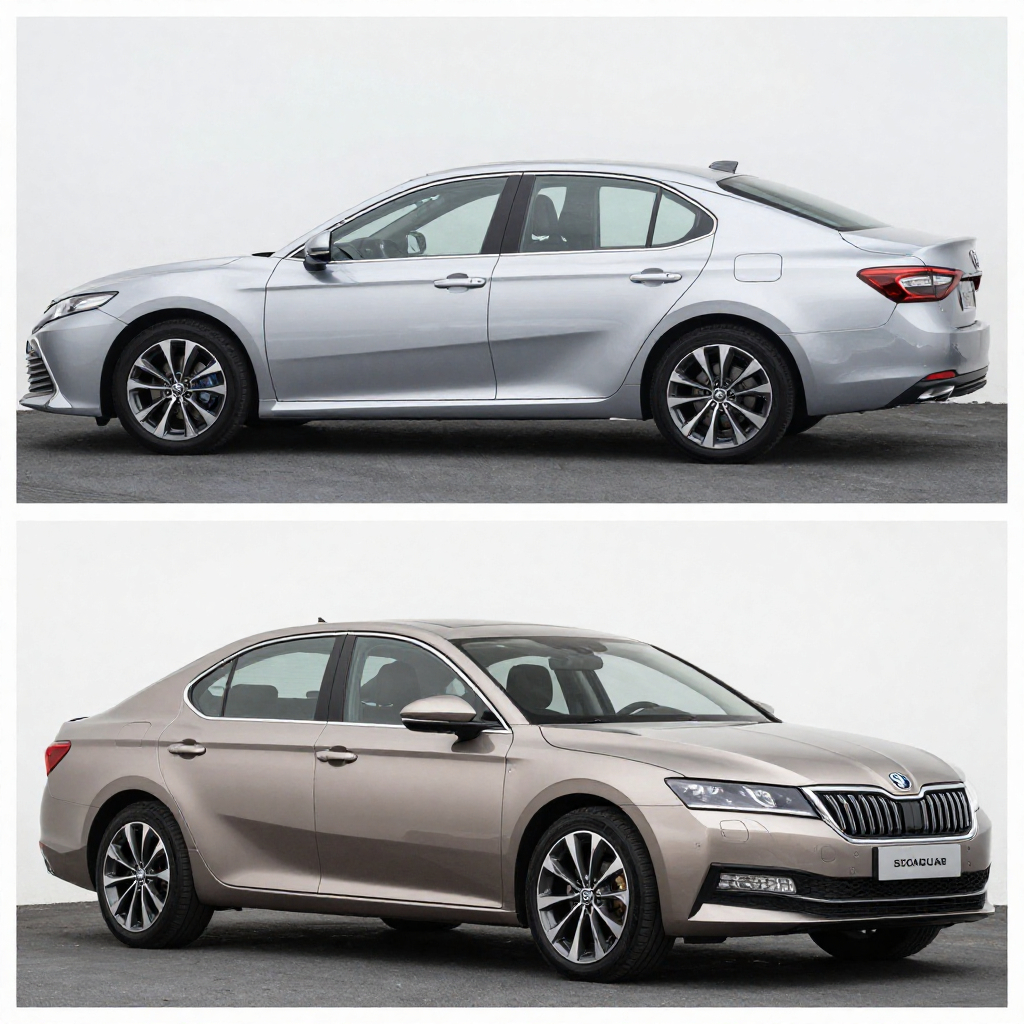
Picking between two flagship sedans isn’t easy, especially when both the Toyota Camry and Skoda Superb bring something special to the table. If you’re weighing these two cars, you’re probably looking for a premium sedan that balances comfort, performance, and value. Let’s break down how these two compare so you can make the right call. What Makes These Sedans Stand Out The Toyota Camry and Skoda Superb compete in the premium sedan segment, though they take different approaches to luxury. The Camry, now in its ninth generation, focuses on hybrid efficiency and rear-seat comfort. The Superb, on the other hand, emphasizes spaciousness and European design sensibilities. Both cars start around Rs 48-50 lakh, making this a genuine head-to-head comparison. At Castle Toyota, we help buyers understand what makes each vehicle tick. Whether you’re considering a new purchase or want to explore what these sedans offer, having the right information makes all the difference. Engine Performance and Powertrain Toyota Camry: Hybrid Power The 2025 Toyota Camry comes with a 2.5-liter hybrid petrol engine that produces 171 BHP, with a combined output of 230 BHP from the engine and electric motor. This setup pairs with an e-CVT gearbox that prioritizes smooth power delivery over sporty acceleration. The hybrid system gives you three drive modes: Sport, Eco, and Normal. In Eco mode, you can run on pure electric power if the battery has enough charge. The Camry’s claimed fuel efficiency stands at 25.49 kmpl, which is exceptional for a car this size. Skoda Superb: Traditional Power The Skoda Superb uses a 2-liter turbo-petrol engine that delivers 190 PS and 320 Nm. It comes with a 7-speed DSG automatic transmission that sends power to the front wheels. The Superb offers more immediate throttle response compared to the Camry’s CVT setup. Globally, the Superb is offered with multiple powertrains including diesel and plug-in hybrid options, though India initially gets the turbo-petrol variant. Design and Dimensions Exterior Styling The Camry features new C-shaped LED headlamps and a revised bumper with functional air vents for better aerodynamics. The design is sleeker than before, borrowing styling cues from the global Toyota Prius. It sits on 18-inch alloy wheels and measures 4,920mm in length. The Superb measures 4,869mm in length, 1,864mm in width, and 1,503mm in height with a wheelbase of 2,841mm. It maintains Skoda’s signature butterfly grille and sharp character lines. The design is more understated and elegant compared to the Camry’s sportier look. Interior Space and Comfort Both sedans prioritize rear-seat comfort, but they do it differently. The Camry offers rear seat heating, boss mode, and a reclining function for better comfort. The rear seat armrest includes touch controls for various functions. The Superb lives up to its name with generous cabin space. It offers a boot space of 625 liters, which edges out the Camry’s 524 liters. Both cars feature three-zone climate control, ensuring everyone stays comfortable. At Castle Toyota, customers often appreciate the Camry’s focus on chauffeur-driven comfort. The seats are designed for long-distance travel, making it ideal for business executives. Technology and Features Infotainment and Connectivity The 2025 Camry features a new 12.3-inch infotainment system and an instrument cluster, along with a 9-speaker JBL sound system. It supports wireless Apple CarPlay and Android Auto, plus you get wireless phone charging. The Superb comes with a 13-inch free-floating touchscreen system with wireless Android Auto and Apple CarPlay, plus a 10-inch digital driver’s display. Some variants feature a 12-speaker Canton sound system. Both cars offer heads-up displays and connected car technology. The Superb’s larger screen gives it a slight edge in the tech department. Safety Features The safety features in the Toyota Camry Hybrid include ADAS, a 360-degree parking camera, front parking sensors, and more. You also get nine airbags, ABS with EBD, and a full suite of electronic stability controls. The Superb offers multiple airbags, ABS with EBD, electronic stability control, and a full suite of Level 2 ADAS features including turn assist, emergency steering assist, auto emergency braking, and cross-road assist. Both sedans take safety seriously. Fuel Efficiency Comparison This is where the Toyota Camry truly shines. The hybrid powertrain delivers exceptional mileage for a sedan of this size. Real-world fuel economy typically stays above 20 kmpl, which translates to substantial savings over time. The Superb’s turbo-petrol engine focuses more on performance than efficiency. While it delivers strong acceleration and highway cruising capability, the fuel consumption will be higher than the Camry’s. For buyers prioritizing running costs, the Camry’s hybrid system offers a clear advantage. The savings add up quickly if you drive frequently or cover long distances. Price and Value Proposition Toyota Camry Pricing Following the GST rate cut, the price of the Toyota Camry in India now starts at ₹47.48 lakh (ex-showroom). You get two variants—the Elegant and the Sprint Edition—both offering comprehensive equipment lists. Skoda Superb Pricing The new-generation Superb is expected to be priced from Rs 50 lakh (ex-showroom) when it launches in India. It will arrive as a completely built unit (CBU) import in limited numbers. The Camry offers better value considering its hybrid technology and proven reliability. Toyota’s reputation for low maintenance costs adds to the ownership appeal. Ownership Experience Maintenance and Reliability Toyota has built its reputation on reliability and low ownership costs. The Camry benefits from Toyota’s extensive service network and readily available parts. At Castle Toyota, our service centers ensure your Camry receives proper care using genuine parts. The hybrid system requires minimal additional maintenance beyond regular service intervals. Battery warranties typically cover long periods, giving owners peace of mind. Skoda has improved its service network in India, though it’s not as widespread as Toyota’s. As a CBU import, the Superb may have longer wait times for certain parts. Resale Value The Camry historically holds its value better in the Indian market. Toyota’s reliability reputation and the hybrid system’s appeal contribute to strong resale prices. This matters if you plan to upgrade in a few years. The Superb’s resale value has been less predictable,